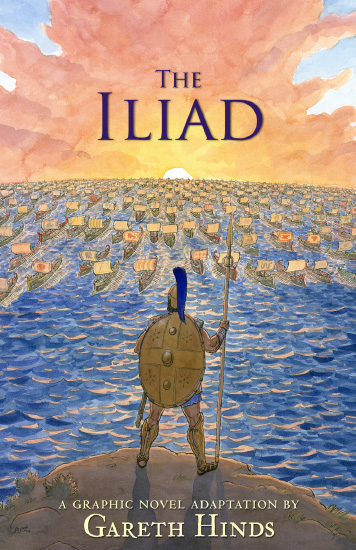
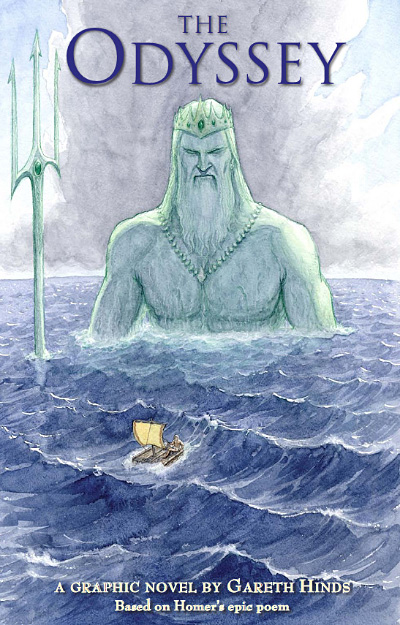
The Iliad and The Odyssey
My nine-year-old grandson owns these two graphic novels, and we read them during the year. They are textually reinterpreted and wonderfully illustrated by Gareth Hinds. These are two epic poems attributed to Greek poet Homer who lived in either the 8th or 7th century BCE. The Iliad tells the story of the nine-year Trojan War, focusing on the hero Achilles and the conflict between the Greeks and Trojans, which the Greeks won. It is a violent story suffused as well with the presence of the gods, who keep interfering and playing favourites among the warriors on the ground.
Odysseus returns
Odysseus, King of Ithaca, was one of the Greek heroes of the war. When it ended, he wanted only to get back to his wife Penelope. But he had offended the sea god, Poseidon, who dooms him to years of shipwreck and wandering. Eventually, he does return to Ithaca, where his wife has been evading suitors who covet his kingdom. They spend their time feasting and drinking at her castle and arguing among themselves.
Odysseus returns in disguise. With the help of his son Telemachus and some of his old servants, he seizes the castle from the suitors who seek to wed his queen and seize his throne.
Those scenes are violent as well, the more so given their vivid depiction by Gareth Hinds. That did not seem to bother my grandson, who told me quite accurately that he knows a lot about Greek mythology. My previous experience with these poems was limited to a much-abridged version called The Great Adventurer, which was on my curriculum in the eighth grade.
The Strangest Dream: Canadian communists, the spy trials, and the cold war
This book arises from Merrily Weisbord’s childhood in a communist family in Montreal during the Cold War. The people who she writes about were dear friends and comrades of her parents. They would not have spoken to others, but they did to her.
Their stories are powerful, poignant, and tragic. Powerful because they believed so strongly that they were part of an international movement to create a better world. Poignant because they were shunned in the wider community.
But the more painful betrayal was by Tim Buck and other party Communist Party leaders in Canada. Buck stifled the hopes of party members in Quebec who were nationalists as well as communists. Buck would not accept what he viewed as their “bourgeois nationalism,” unbecoming of communism as an international movement. He was unsparing in his criticism and exclusion of members who did not fall in line, even at the cost of blowing up the party in Quebec.
Cold Case North: The Search for James Brady and Absolom Halkett
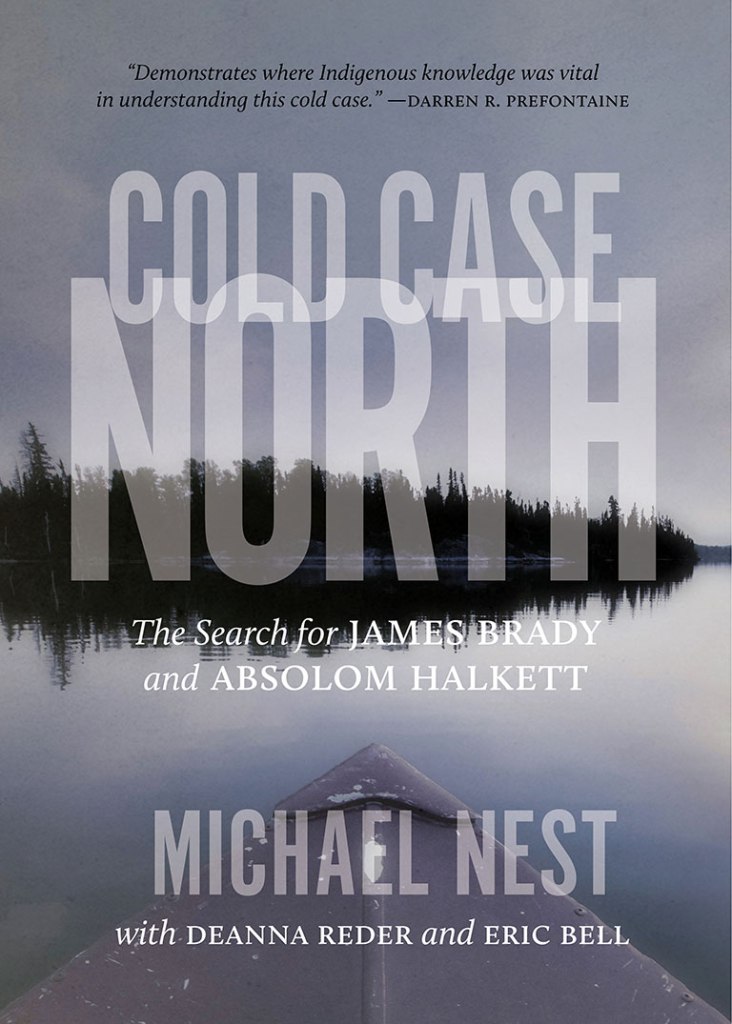
In 1976, James Brady, a prominent Métis activist, and Absolom Halkett, a Cree band councillor, both from the northern Saskatchewan town of Lac La Ronge, went missing while on a prospecting mission near Lower Fraser Lake. There was a cursory RCMP investigation and a coroner’s report that presumed they had perished, likely while trying to walk out of the bush. But people in the community knew the pair as seasoned trappers and woodsmen who were unlikely to have died in that way. There were always deep suspicions, especially within the Indigenous community, that the two had been murdered.
Reviving a cold case
Fifty years later, a trio of researchers took up the cold case. Michael Nest is an Australian writer now living in Canada. Deanna Reder, a professor at Simon Fraser university, is the niece of an elder Métis activist in Saskatchewan who repeatedly insisted that she review the case. Her cousin Eric Bell was a councilor with the Lac La Ronge Band.
They reviewed the case for old leads and followed new ones. I won’t ruin the book’s suspense. But based on new interview material and other clues the three concluded the two men had, indeed, been murdered, and their bodies dumped in a lake. They have tried, so far without success, to have the RCMP reopen the investigation.
The One Hundred Years War on Palestine: A History of Settler Colonialism and Resistance, 1917-2017
The anniversary of an attack by Hamas militants on Israel on October 7, 2023, has come and gone. The prevailing narrative in our media is that Israel was attacked by terrorists and has a right to defend itself, no matter the cost in Palestinian lives and destruction.
I wanted a deeper history of what has happened Israel-Palestine. I chose this book written by Rashid Khalidi, an American of Palestinian descent, who until recently taught at Columbia University in New York City.
Khalidi belongs to a prominent family in Palestine going back to a time when it was part of Ottoman Empire. His great-great-uncle Yusuf Diya al-Khalidi was the mayor of Jerusalem in the 1890s, and he also taught for a time at the Royal Imperial University in Vienna.
Birth of Zionism
It was in Vienna in 1896 that Austrian Theodor Herzl published a book called The Jewish State. In it, he argued that the assimilation of Jews into European society was impossible and that the only solution was the creation of a specifically Jewish state, preferably in Palestine. Herzl considered it the homeland of the Jews. Herzl’s book was followed in 1896 by the establishment of the Zionist World Congress, and he became its first president.
In 1899, Yusuf al-Khalidi sent a seven-page letter to Herzl warning him against the Zionist project. “Palestine is an integral part of the Ottoman Empire,” he wrote, “and more gravely, it is inhabited by others.” It would be “pure folly,” he said, for Zionism to take over Palestine.
In his private diary in 1895, Herzl was explicit about his plan: “We shall try to spirit the penniless population across the border by procuring full employment for it in the transit countries, while denying it employment in our own country . . . Both the process of expropriation and the removal of the poor must be carried out discreetly and circumspectly.”
Ethnic cleansing in Palestine
Now, 130 years later, after untold suffering and bloodshed, Israel has dropped any pretense of acting “discreetly and circumspectly.” Gaza has been all but destroyed and now extremist members of Prime Minister Netanyahu’s cabinet are calling for a permanent occupation and Israeli settlement. In the West Bank, settlers, aided by the military, are on a continuing rampage, destroying Palestinian homes, fields and flocks.
The president of the U.S. now says bluntly that people in Gaza should be removed to neighbouring countries. In this proposed ethnic cleansing, his realtor son-in-law sees business opportunities in Gaza’s beachfront. Herzl’s plan is coming full circle, but it will be resisted.
Readers comments
In an earlier post about my reading in 2024, I invited comments on books that you found interesting. Judy Haiven of Halifax shared a link to her blog which contained a list of books and films. She mentioned What You Have Heard is True: A memoir of witness and resistance, by American poet Carolyn Forché. I have read that book. It tells the gripping story of how Forché became drawn in as a witness to the civil war in El Salvador in the 1970s and 80s. She tried repeatedly to inform citizens of the U.S. about the atrocities their government was supporting in El Salvador.
Marlene Zacharias says, “I am still reading, referencing, Humankind: A Hopeful History, by Rutger Bregman. A meaningful book because it’s hopeful and challenges my world view at times. Probably my best book read in 2024 and one I will continue to reference.”
Susan Rosidi provided a long list, which includes Say Nothing, a True Story of Murder and Memory in Northern Ireland, by Patrick Keefe. She describes it as “an excellent account of “the troubles” profiling several key players in the Provisional IRA.” I have read this book and found it both compelling and disturbing. It is an example of how the cause of Irish nationalism was overtaken by mindless violence.
Susan also recommended Run Towards the Danger, by Sarah Polley. Susan describes the book as, “Six moving and candid essays from pivotal times in her childhood and adulthood.”
Leona Theis says, “I’ve listened twice to Sarah Polley’s book of essays. Excellent.”
Discover more from Pulpit and Politics
Subscribe to get the latest posts sent to your email.
 Pulpit and Politics
Leave a comment