
I always post a year end piece describing books that I have read in the preceding twelve months. This year, I was traveling in December, so I am a tad late. In a chaotic and troubled world, reading books, whether in my armchair, in bed before sleep, in coffee shops, or, occasionally, on airplanes, remains one of life’s great pleasures.
It is also a way to stay more deeply informed than is possible by reading newspapers or following on-air news, and infinitely preferable to doom scrolling on social media.
Since there were many books, and I want to go beyond one-liners in describing them, my best books 2025 offering will be divided into two sections published in succeeding weeks.
38 Londres Street: On Impunity, Pinochet in England, and a Nazi in Patagonia, by Phillipe Sands
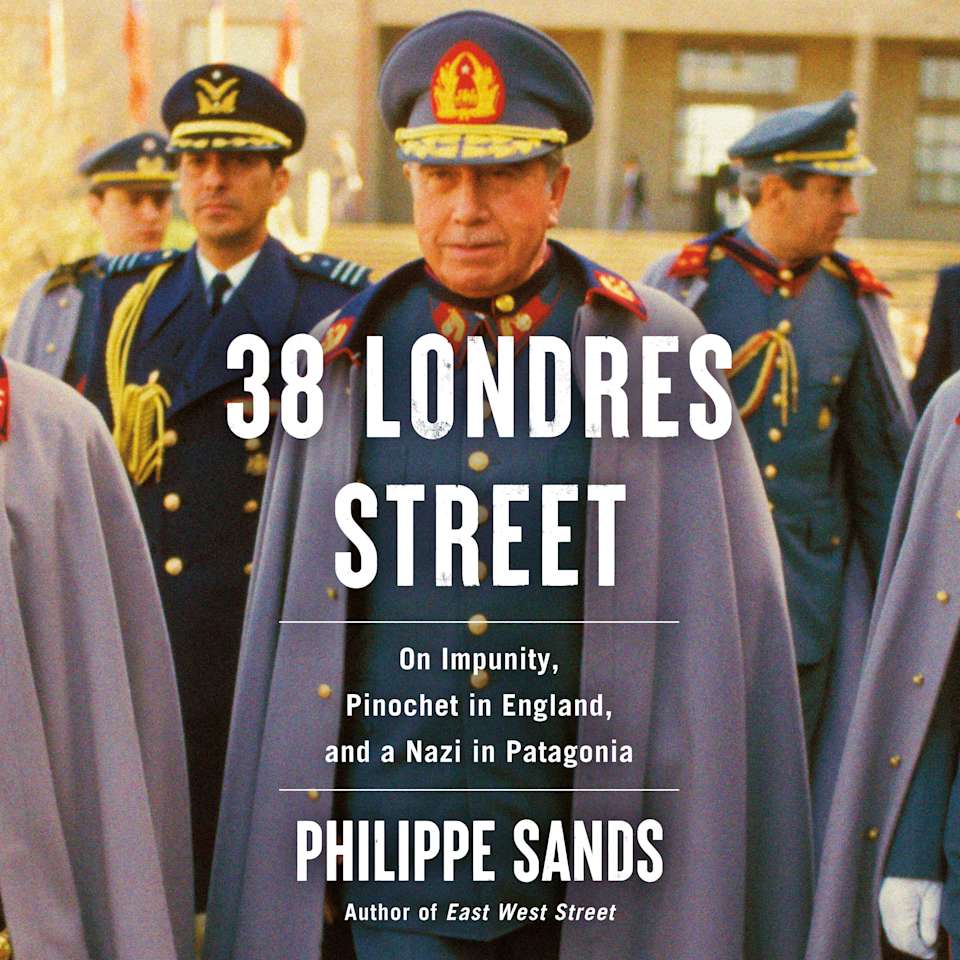
Sands is a British born lawyer, legal scholar, and author. I have read two of his previous books. One is East West Street: On the Origins of Genocide and Crimes Against Humanity, published in 2016. In it, Sands examines the lives of two Jewish lawyers, Hersch Lauterpacht and Raphael Lemkin, who were born within three years of each other and studied in the city, now known as Lviv, in Ukraine.
It was they who, working separately, created the legal concepts of crimes against humanity and genocide, which were instrumental in the prosecution of Nazi officials at the Nuremberg war trials. The book is biographical, but it also deals with the origins of international criminal law in the aftermath of the Second World War.
I have also read The Ratline: The Exalted Life and Mysterious Death of a Nazi Fugitive. Published in 2020, this superbly researched book follows Baron Otto von Wächter, a highly placed Nazi officer and war criminal, in his attempt to escape prosecution after the Second World War.
Sands’s book 38 Londres Street, published in 2025, is titled after the address of a building in Santiago used by Augusto Pinochet’s secret police to torture Chileans following the coup against the elected government of Salvador Allende in 1973.
Fifteen years later, in October 1998, Pinochet was arrested at the request of Spanish prosecutors while he was in London. They said he should be extradited to Spain and prosecuted for crimes against humanity, genocide, and torture. His lawyers claimed that Pinochet could not be prosecuted for any alleged crimes because he had been head of state. (Sound familiar, Mr. Trump?)
The British courts set an international precedent by ruling against that argument, but the Blair government found a convenient way out of a sensitive international incident by agreeing that Pinochet was too elderly and frail to stand trial. They sent him home.
Sands, who is an expert in the law as it relates to crimes against humanity and genocide, covers every in-and-out of the legal maneuvering and judgments in the Pinochet case.
But more fascinating for me was his indefatigable detective work to link Nazi war criminal Walter Rauff directly to Pinochet and to the torture and disappearances which occurred at 38 Londres Street. Following the Second World War, Rauff had escaped, first to Syria, then Ecuador, and eventually to Chile, where he ran a fish cannery in Patagonia. But he also participated in much darker activities.
Sands is a fine writer and has been described as a “voracious researcher,” both traits that he exhibits in all his books. I am impressed by his ability to have people talk to him, even people with whom you might expect him to disagree and even despise. In this book, they include Pinochet apologists and people who drove the vans taking disappeared people to their deaths in Chile.
Mick Herron crime novels

Herron has become the British heir apparent to the late John le Carré as a spy novelist. He has written eight novels in his Slough House series. Slough House is where spooks from MI5 are sent when they have committed some unpardonable indiscretion in the eyes of “the centre,” as MI5’s establishment is described. The Slough House crowd is overseen by Jackson Lamb, a foul-mouthed alcoholic whose indiscretions included murdering a colleague. Although they are considered losers, and housed in a decrepit and under-equipped building, they manage under Lamb’s surly leadership to solve threats to national security that elude their peers at the centre.
I had a Mick Herron reading binge in 2025, reading four Slough House novels. They are Spook Street, London Rules, Joe Country, and Bad Actors. I had previously read Slow Horses. Also in 2025, I read two of Herron’s Oxford Novels, which follow a private investigator named Zoe Boehm. Those books are Down Cemetery Road, and The Last Voice You Hear.
Herron’s plots are complex and at times they stretch credibility, so much so that it is difficult to suspend disbelief. But he is very good at character development, something one appreciates as the novels accumulate. The city of London, grimy, wet, and grey, becomes almost another character in his books, much as Edinburgh does for Scottish crime writer Ian Rankin.
Herron is prolific. He has eleven other novels which I have yet to read. Full year ahead.
Short Haul Engine, by Karen Solie

Solie has become a poetic superstar in Canada, where she won the Governor-General’s Award for poetry in 2025, and she is also well known in the US. Short Haul Engine (2001) is one of her early books, and I have read it several times. My copy is from 2016, the book’s seventh printing. Sole is tough and grounded, about relationships and about the wider world. I am drawn to her in part, because she is originally from rural Saskatchewan, as I am, and she makes that specific experience universal in her writing.
Tommy Douglas & the Quest for Medicare in Canada, by Gregory Marchildon

Marchildon is a respected health care researcher and writer. He is a former cabinet secretary in the Roy Romanow government in Saskatchewan and was later executive director the of the Romanow-led Royal Commission into health care which reported in 2002.
Marchildon tells the story of how Medicare was pioneered in Saskatchewan under the guidance of Tommy Douglas as premier. Marchildon is an untiring researcher and his book is replete with details of how Douglas was able to accomplish the unlikely, if not the near impossible, in a drought-stricken province which was on the verge of bankruptcy when Douglas became premier in 1944.
His government pioneered publicly financed hospital care in 1947 and introduced tax paid visits to doctors and various other health procedures in 1962, but only after a bitter doctors’ strike that lasted for twenty-three days. By then Douglas had moved on to lead the federal New Democratic Party, and he used his position to advocate on behalf of Medicare for all of Canada. That was accomplished under a Pearson government in the late 1960s, and Marchildon shows how Douglas can claim to be one of Medicare’s fond parents.
Master Pieces: The Curator’s Game, by Thomas Hoving

I am not an expert in art, but I do enjoy going to galleries and am especially fond of Renaissance painting. Hoving was director of the Metropolitan Museum of Art in New York. In this book, he describes a game in which each week a different curator brought photographs containing details taken from paintings in the museum’s collection.
Staff members would examine those details, perhaps hands, eyes, or clothing worn by people in the larger masterpieces, along with some verbal hints. Whoever could correctly identify the larger painting based upon the clue presented won free coffee, while the losers paid.
Hoving used that game to create this book. Just over two hundred details drawn from the larger paintings are presented pictorially, along with written clues. Toward the end of the book, each of fifty-seven paintings is named and presented in full, along with the gallery or museum in which it can be found.
I checked off fourteen that I have seen in galleries in Canada and Europe. One of them, Vulcan and Aeolus, by Piero di Cosimo, is found in the National Gallery in Ottawa.
Because somebody asked me to, by Guy Vanderhaeghe

Vanderhaeghe is an esteemed historical novelist and writer of short stories, but this book contains mostly essays and book reviews. As its title suggests, all the pieces were commissioned.
Although we did not know each other then, Vanderhaeghe and I are contemporaries, both from rural Saskatchewan, both graduates of the University of Saskatchewan in Saskatoon.
I especially like his chapter in the book called Influences, which he wrote for the publication Canadian Literature in 1984. In it, Vanderhaeghe describes the reading he did as a young boy. He quotes writer Vladimir Nabokof as saying that “’bad’ writing is as influential in the development of a writer as ‘good’ writing.’”
My experience parallels Vanderhaeghe’s, although there were obviously more books in his home than in mine. He mentions Zane Grey, the author of many American-based westerns. I read Grey eagerly and would add to my list the western frontier writer Louis L’Amour, and in Canada Jack O’Brien’s books about a wild dog in the Canadian arctic named Silver Chief, who was tamed by RCMP Sergeant Jim Thorne.
These were hardly classic works of literature. Unless, in my case at least, “classic” meant Classics Illustrated comic books. I had a large cardboard box filled with run-of-the-mill comics and a smaller number of Classics. They were graphic treatments of books such as El Cid, The Count of Monte Cristo, and the Three Musketeers.
Vanderhaeghe progressed from Zane Grey to become a three-time winner of the Governor General’s Awards. Not bad, we might say, with typical prairie understatement.
Beowulf, A Graphic Novel, illustrated by Gareth Hinds
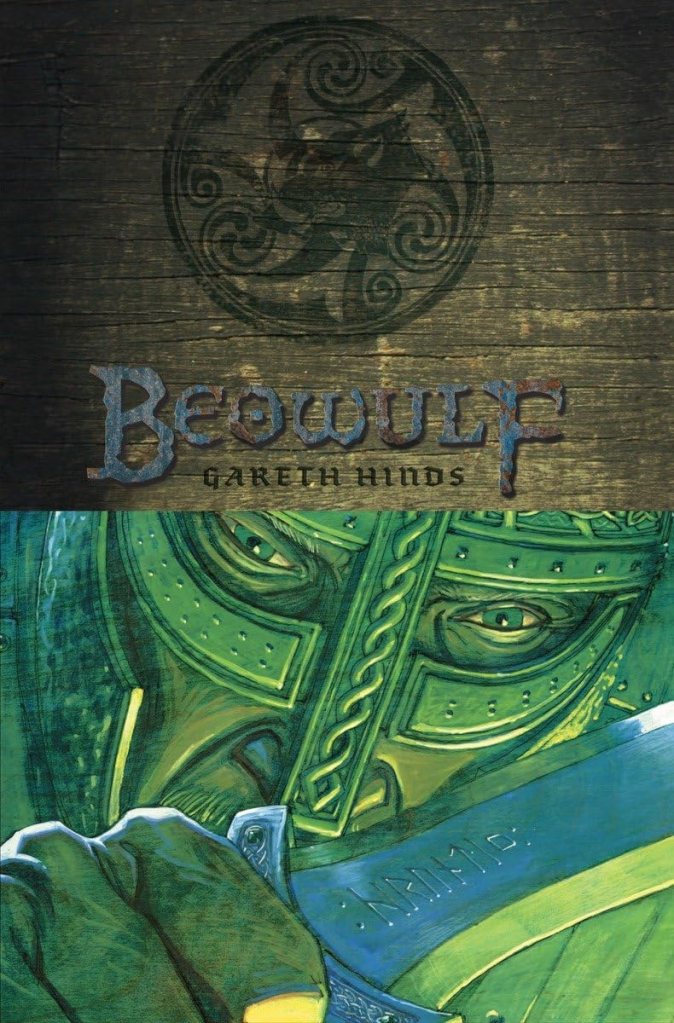
My ten-year-old grandson Solomon loves literature and is especially fond of mythology. In previous years, we have read The Iliad, and The Odyssey in graphic format. Their author-illustrator is Gareth Hinds and his work is extraordinary.
This year for his birthday, my grandson received Beowulf: a Graphic Novel, also illustrated by Hinds. Beowulf is a thousand-year-old epic saga of a great warrior. A monster ravages the grand hall of a Danish king. Later, the heroic Beowulf arrives from Sweden and in combat, he kills the dragon and later the dragon’s evil mother.
Beowulf becomes the renowned king of the Geats (Danes). In his old age another dragon attacks, and Beowulf goes back into battle. He manages to slay the dragon but is mortally wounded and dies shortly after. He is mourned by his people and buried by them, accompanied by treasures as he had wished.
Hinds describes the various battles in gruesome detail, something that, I must admit, appealed more to my grandson than to me. But no less a writer than Irish Nobel laureate Seamus Heaney translated the ancient epic from Old English in 1999. He found in it themes of heroism, loyalty, and the struggle between good and evil, reflecting the values of early medieval Scandinavian culture.
Beowulf also delves into the inevitability of death and the legacy one leaves behind, as seen in his journey from a young warrior to a wise king facing his death.
Just the thing for a ten-year-old and his grandpa.
Discover more from Pulpit and Politics
Subscribe to get the latest posts sent to your email.
 Pulpit and Politics
I loved your selection, Dennis. Guy Vanderhaughe came to the Moose Jaw Festival of Words, 2025, and I purchased his book there. What a good purchase! This weekend I’ll be seeing a movie on the Nuremberg Trials at the Roxy. I know next to nothing about them, and wish I had the background. I will keep Sand’s name in mind. Beowulf is a favourite of mine, and, as my own grandchildren reach that magic age, I really appreciate suggestions. You and Guy devoured books in abridged and comic form, but I always disparaged “quick-books”. I have changed my mind. Thank you for helping in that realization – and keep letting us know what “goodreads” you have found !
LikeLike
Thanks for reaching out Deanna. I would have replied earlier to your note but for some reason it ended up in my spam file. You mention the film Nuremburg. We saw it just today. Very disturbing to relive that. Yes, Sand’s book East west Street is a very good backgrounder for that.
LikeLike
You are a very serious reader, Dennis. Thanks.
LikeLike
Thank you Marlene. Good to hear from you.
LikeLike
I really enjoyed reading about your recommendations, Dennis. Thanks for this!
LikeLike
My pleasure Jennifer. Thanks for reaching out.
LikeLike
I liked your book choices. You might want to read my best of what to watch and what to read here
LikeLike