
Recently I posted about some of the good books that I read in 2025. My list was too long for one post, so here is my sequel. If you want to recommend books for the rest of us in 2026, please use the comments section to do so.
Imperium, by Ryszard Kapuscinski
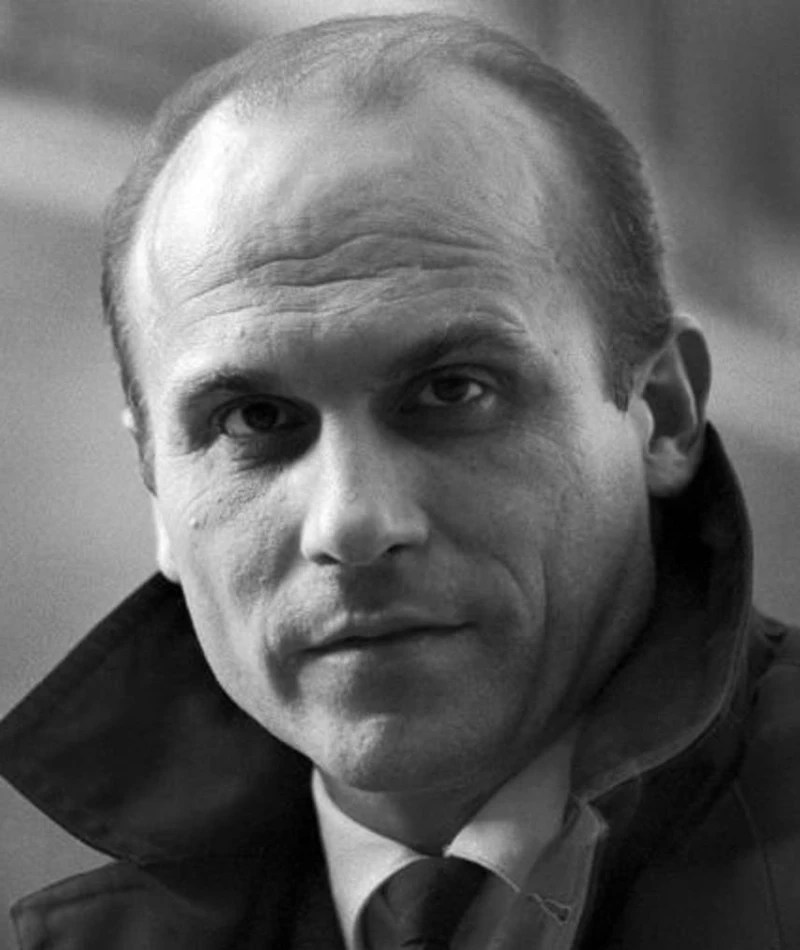
Kapuscinski, who died in 2007, was acclaimed as one of the world’s great journalists. The lone foreign correspondent for a Polish news agency, he wrote about wars and conflict all over the world. He traveled on the cheap and usually on his own, avoiding the usual hotels haunted by other foreign correspondents. The Wall Street Journal once said of him: “When our children’s children want to study the cruelties of the late 20th century … they should read Ryszard Kapuscinski.”
Most of this book describes his travels between 1989 and 1991 in the former Soviet Union shortly after its dissolution. But Kapuscinski begins in his hometown of Pinski in Poland in 1939, when the Red Army swept through and came banging on his family’s door in the middle of the night looking for his father, who was in the Polish army.
One senses that Kapuscinski waited sixty years for the Soviet colossus to tumble. When it did, he traveled the vast Siberian railroad, observing and interacting with Soviet citizens who were accustomed by experience to be guarded and wary.
In 2025, I re-read Kapuscinski’s Another Day of Life, his masterful eyewitness account of the end of the civil war in Angola in 1975. I have also read his Shah of Shahs about the Phalavi dynasty in Iran. This book was written shortly after the Iranian revolution in 1979, in which the dictator Mohammad Reza Pahlavi was overthrow by Islamic militants.
Now, many years later, his son Reza Pahlavi, who lives in exile in the US, is urging Iranians on in their revolt against the mullahs and positioning himself as the leader that Iranians need.
Kapuchinski’s book about the cruelty and narcissistic excesses of the Phalavi’s should serve as a warning against such a revival.
Fires: Essays, Poems, Stories, by Raymond Carver
I re-read this book of Carver’s containing his essays, poems, and stories. Carver, who died in 1988, came from a tough working-class background. His stories were minimalist, somewhat in the manner of Ernest Hemmingway, and described as a “dirty realism.”
My favourite book of Carver’s short stories is Cathedral, published in 1983. His descriptions of marital and friendship relationships crackles with tenson on every page. Often the characters are drinkers, as he was until he quit entirely.
In their 1989 nomination of Carver for the Pulitzer Prize, the jury concluded, “The revival in recent years of the short story is attributable in great measure to Carver’s mastery of the form.”
The Certainty Illusion: What You Don’t Know and Why It Matters, by Timothy Caulfield
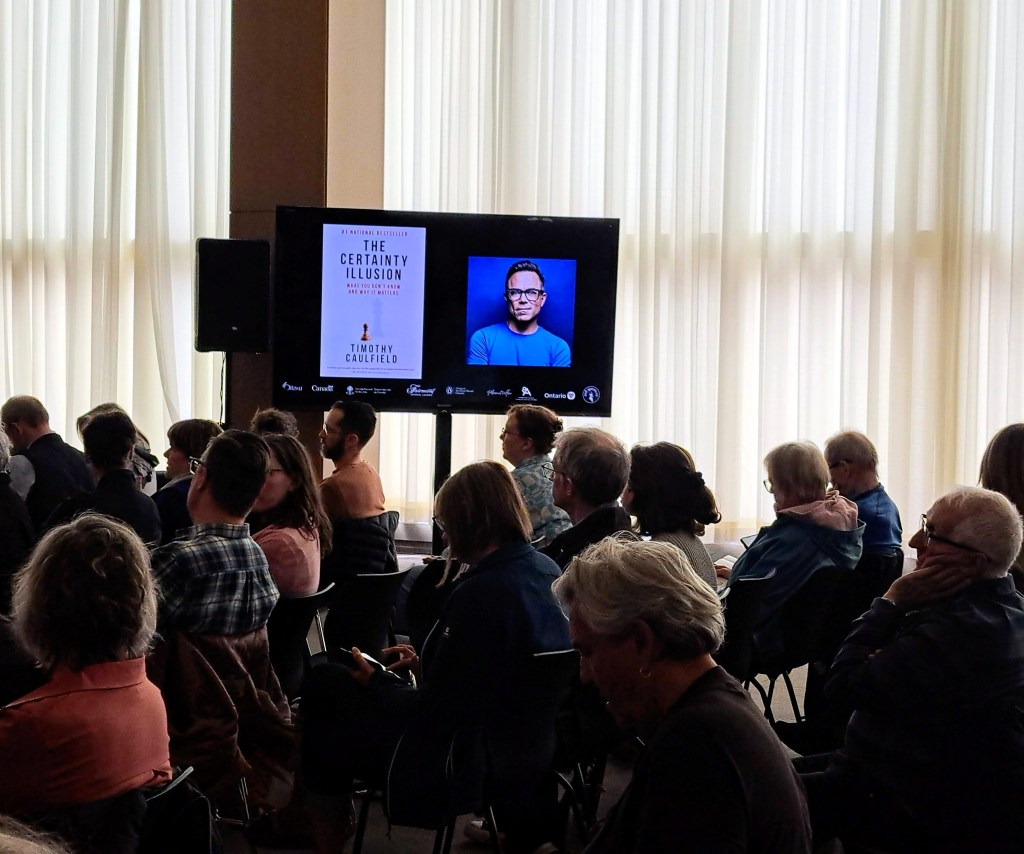
Caulfield is a professor in the Faculty of Law and the School of Public Health at the University of Alberta. I attended an event at Library and Archives Canada, where Caulfield was interviewed by Carleton University professor Sarah Everts. She described Caulfield as a “pseudo-science debunker.”
Caulfield told Everts that he reads first thing every morning, and most days he encounters “a dumpster fire” of misinformation. At the event, and in his book, he talks about the absolute importance of science and scientific research. He laments how they are being undermined, not only by bad actors, but also from within.
As an example, he describes how “predatory journals” with legitimate sounding names will publish papers, which are not peer reviewed, by anyone willing to pay. “Those journals are polluting knowledge environment.”
Some academics, under intense pressure to publish or perish, have also been known to use predatory journals to burnish their own credentials. Caulfield says that undermines faith in science.
Robert F. Kennedy Jr., who is secretary of health and human services in the Trump administration, continues to use a study first published by a such a journal to claim there is a link between vaccines and autism. Caulfield that claim has been debunked by medical practitioners and health scientists.
So, if there is so much disinformation around, how do we protect ourselves? For one, Caulfield says, rely on trusted sources, which are peer reviewed and fact checked, rather than on the latest social media post.
He advises to watch for misleading code words used in marketing, such as natural, holistic, organic, toxin free, locally grown, quantum healing, immune boosting, and stem cell.
Caulfield also warns against what he calls illusory superiority. “We all have biases, powerful ideas that we are good at stuff and that no one else is. But being aware of this helps you avoid cognitive bias.”
He advocates humility. “Admit that we don’t know what we don’t know. Humility is important, especially when it comes to science, which moves slowly and is open to uncertainty. Beware the ‘single study syndrome’. Science requires a body of evidence. Be patient. Wait for that evidence to emerge.”
At is book event, Caulfield told the interviewer, “Anecdotes can overwhelm our ability to understand science.” In his book he writes, “Humans are hard-wired to respond to narratives.” He talks about the power of documentary films, for better or worse. “The dramatic use of anecdotes is a narrative tool often employed in documentaries … Unfortunately, an anecdote, no matter how compelling, is not the same as scientific data.”
Finally, Caulfield says that those involved in science must push back against misinformation mongers with facts. “Just because it is hard to do, does not mean that we can’t do it.”
One reviewer describes Caulfield’s book as “the beacon of light that is so badly needed right now to guide us out of the modern dark ages of misinformation and to keep us from collectively losing our minds.”
Reappraisals: Reflections on the Forgotten Twentieth Century, Tony Judt
Judt was one of my favourite writers in The New York Review of Books. I use the past tense because he died in 2010. He was an English historian, author, essayist and professor who specialized in European history. He later moved to New York to teach and write there.
His book, Reappraisals, published in 2009, is a collection of essays written for a variety of publications, including the New York Review, The Nation, The London Review of books, and the Israeli newspaper Haaretz.
The topics range widely and include the existence of Marxism in several European countries (he was a social democrat and no fan of communism); American foreign policy; the fate of liberal democracy, a topic which is the subject of much anguish today; and the ideas of people as disparate as Hannah Arendt, albert Camus, and Pope John Paul II.
Judt, a Jewish intellectual, writes with a special clarity about Israel. He describes the Six-Day War in 1967, in which the Israeli air force engaged in surprise attacks on neighbouring countries, as a “dark victory” for Israel. The victory fed the arrogance of the Israeli government and military establishment. It heightened their contempt for neighbouring Arab countries and the Palestinians and encouraged them to make their land grab permanent. “A historic victory,” Judt wrote, “can wreak almost as much havoc as a historic defeat.”
Mortal Acts, Mortal Words, by Galway Kinnell
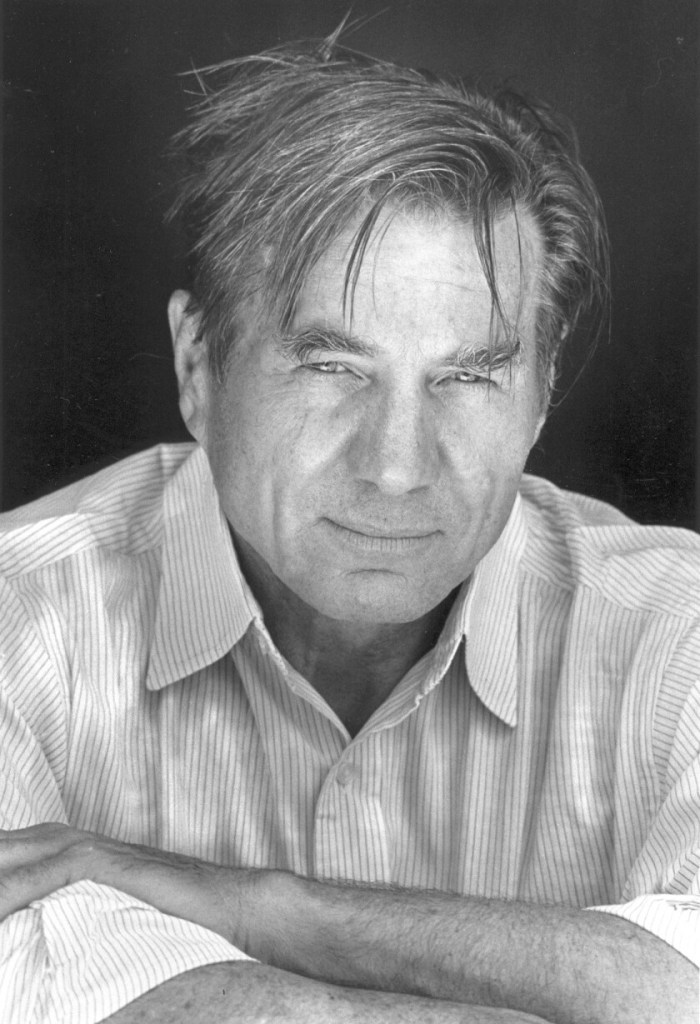
Kinnell was an American of Irish heritage and a winner of the Pulitzer Prize for poetry and numerous other awards. I have re-read this book more than forty years after I received it as a gift from a friend in Brooklyn. We were young newspaper reporters together at the Windsor Star before he returned to the US. Later, we attended a reading by Kinnell when I was visiting New York.
Kinnell was also a human rights activist and those themes found their way into his poetry. Like much of his work, Mortal Acts, Mortal Words is quite dark, but its themes are domestic, poems about his child, his brother, and his mother. His poem, “After Making Love We Hear Footsteps,” about his young son Fergus, is one of his most anthologized.
Re-reading a poem called “Goodbye,” I now realize that it served as inspiration for a poem that I wrote about my mother’s death, published in my book Gringo in 1983. I had forgotten, but reading Kinnell’s poem refreshed the memory. It was a gift.
Chasing Shadows, by Ronald Deibert
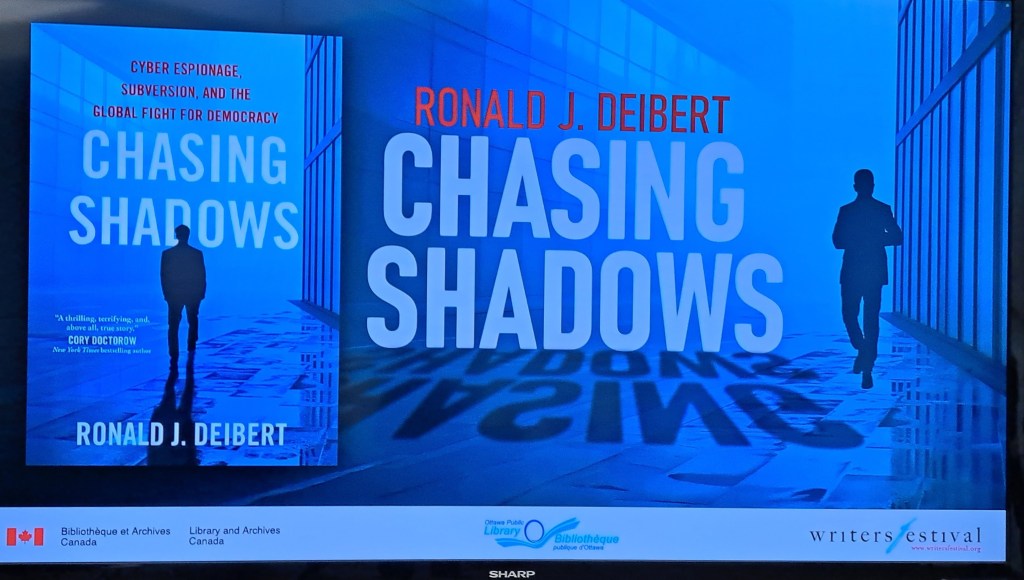
Ronald Diebert is a professor of political science at the University of Toronto and founder and director of The Citizen Lab at the university’s Munk School of Global Affairs & Public Policy. He and his team investigate and expose bad actors who use cyber technology to spy upon, and often harm, people who they consider to be threats.
These bad actors include the leaders and henchman of authoritarians and dictators everywhere. Think, for example, of the luring and dismembering in Turkey of Saudi dissident and Washington Post columnist Jamal Khashoggi in 2018.
The Biden government in the US believed that Khashoggi’s murder had the paw prints of Saudi leader Mohammed bin Salman all over it. Khashoggi’s smart phone had been hacked by the Saudis, as was that of a friend of Khashoggi’s and a fellow Saudi dissident who lives in Quebec.
Citizen Lab has been called “the world’s foremost digital watchdog,” using its technology and skills to uncover dozens of cyber espionage cases aimed at people in countries as disparate as Spain, Poland, Hungary, Greece, Guatemala, El Salvador. People often approach the Lab with their devices to see if they have been compromised.
Deibert recounts in his book how the Lab exposed the world’s pre-eminent cyber-mercenary firm, Israel-based NSO Group, which created a phone-hacking program called Pegasus. The software is marketed and sold widely, and, as Diebert shows, without regard to its murderous end uses.
One of my questions after a book event featuring Diebert at Library and Archives Canada in Ottawa, is how does the Lab keep up with such pervasive surveillance? Likely, they do not keep up, impressive as they are, but there are others who do similar work, including Amnesty International and Human Rights Watch.
A second question, which Diebert did not address, and which is given scant attention in the book, is this. Given the intimidation and bodily harm conducted by the thugs who purchase and use surveillance software, are Diebert and his small band not afraid for their own safety? I hope they are taking precautions.
The Leap: How to Survive and Thrive in the Sustainable Economy, by Chris Turner
This is a book I picked up on sale at my local branch library for three dollars. That explains why it is somewhat dated, published in 2011. Based in Calgary, Turner is a fine writer on renewable energy. In this book, he highlights sustainable technologies that are underway and working.
He writes that in the move to a sustainable future incrementalism will not suffice. “We need a decisive jump from one structural foundation [carbon based] to another inside a single generation.”
Turner does not find that leap in the succession of global climate conferences that have been occurring since the 1980s. He believes that they feature world leaders negotiating targets for greenhouse gas emissions that never materialize.
Rather than the “burden-sharing” negotiated at UN summits, he is more interested, for example, Germany used something called a “feed-in tariff.” There were no government established caps or taxes. Just a simple piece of legislation under which energy consumers paid a premium to their suppliers for renewable and sustainable energy. Turner says that created massive industrial spin offs for Germany, and other countries that used the tariff.
Turner points to success in cities like Copenhagen, which have pedestrianized their city cores, and provided a mix of public transit and bicycle infrastructure to reduce vehicle traffic congestion.
Countries like Spain and France have invested in excellent rail systems, which allows smaller cities to attract highly skilled people who have easy access to the larger cities when they need it while living in the smaller ones.
Rapid transit has worked wonders in the previously traffic clogged cities of Bogata and Medellin in Colombia. India has invested massively in solar power to provide electricity to small villages which previously have never had it.
Turner writes, quoting a German architect, that “the leap from nonrenewable to renewable energy is best understood not as an economic burden but as the biggest and most transformative business opportunity since the dawn of the industrial age.”
China is the most potent example pointing toward the future of renewable energy. Despite its continuing use of coal, it is moving far more rapidly in the direction of renewables than any other large nation. It became the world’s leading manufacturer of solar panels and wind turbines back in 2009. It is building some of the world’s fastest long-distance trains and a vast rail network. That was before it became the world’s largest manufacturer of electric vehicles.
Turner’s book was published in 2011. There have been some setbacks since that time. Donald Trump has been elected twice as US president. He despises renewable energy. He has not only removed government incentives for renewables but has actively undercut the industry at every turn. In Canada, Danielle Smith is attempting much the same in Alberta.
The feed-in tariff that worked so well for Germany was tried in Ontario by the government of Kathleen Wynne. The Conservative opposition under Doug Ford ran against it and won. Upon election, they cancelled the program and have focused upon natural gas and refurbishing aging nuclear plants at exorbitant cost.
Turner is confident that despite attempts by carbon industry titans and their politicians to prevent it, the shift to renewables is inevitable. He says that the economic and quality-of-life advantages that are already accompanying the shift will ultimately win the day.
Turner has written at least four books since The Leap was published. It is catch up time for me.
Please recommend a book, or books, for the rest of us in the comments section below.
Discover more from Pulpit and Politics
Subscribe to get the latest posts sent to your email.
 Pulpit and Politics
Thak-you, Dennis, for this impressive list, part one and part two. I enjoyed your recommendations, and as always, value them greatly. I’m about to reciprocate — a promise, not a threat!
Lawrence S. Cumming
LikeLike
Thanks Lawrence. Always good to hear from you.
LikeLike