
In a December 2023 issue, Broadview magazine carried a piece that I wrote after a visit to San Miguel de Allende, Mexico last winter. San Miguel is a magnet for expatriates, many of them middle-aged or older, and with money. I tried to look beyond the city’s reputation as tourist haven. Here is that article, lengthened a bit and using somewhat different links.
Last winter, my wife and I spent two weeks in San Miguel de Allende, an expatriate and retirement haven in central Mexico that Condé Nast Traveler named the best small city in the world. San Miguel is indeed attractive: it is nestled in a mountain valley, its winters are warm and predictable, and its enchanting city centre has been designated a UNESCO World Heritage Site since 2008. Unfortunately, the city as it exists today both marginalizes the past and conceals the present.
Recreating colonial Mexico
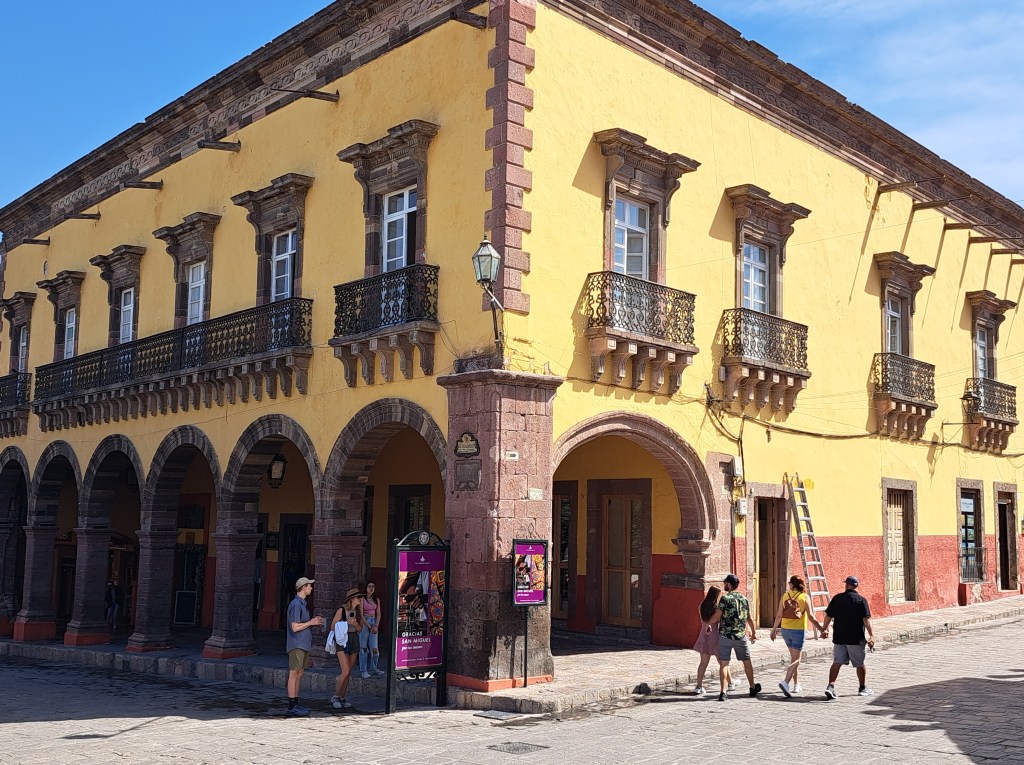
Beginning in the 1940s, local elites and a few expats began creating an image of San Miguel as an unspoiled remnant of colonial Mexico; in reality, much of the city’s “colonial” architecture are renovations that were made in the late 19th century.
Notably La Parroquia, the city’s landmark church, received a makeover between 1880 and 1890, adding a neo-Gothic façade in pink sandstone based upon European models. Across from the church, El Jardin, a popular tree-lined square with benches and a bandstand replaced a previously open plaza which contained a market.
Steeped in history
San Miguel is steeped in history. When the Spanish arrived in the early 1500s, the Chichimeca and other Indigenous peoples had long been living in the area. They fought the interlopers for decades, but they were ultimately overrun. The Spaniards lusted for silver, and they used Indigenous people as slave labour in the mines. San Miguel lay along the silver route but was not a mining town. It was surrounded by large ranches and became a minor centre for producing leather goods. A few families controlled most economic and political life.
By the late 1930s, the city had experienced decades of economic decline. It was then that local elites and a sprinkling of newcomers worked to recreate San Miguel’s image. Today’s tourist narrative celebrates its involvement in the struggle for independence from Spain in the early 1800s, but the Mexican Revolution, which occurred 100 years later, is ignored. The revolution’s central promise was to redistribute land to peasants. San Miguel became a centre of the violent opposition led by big ranchers and the church — a development that promoters of tourism might want to omit.
Cringeworthy image
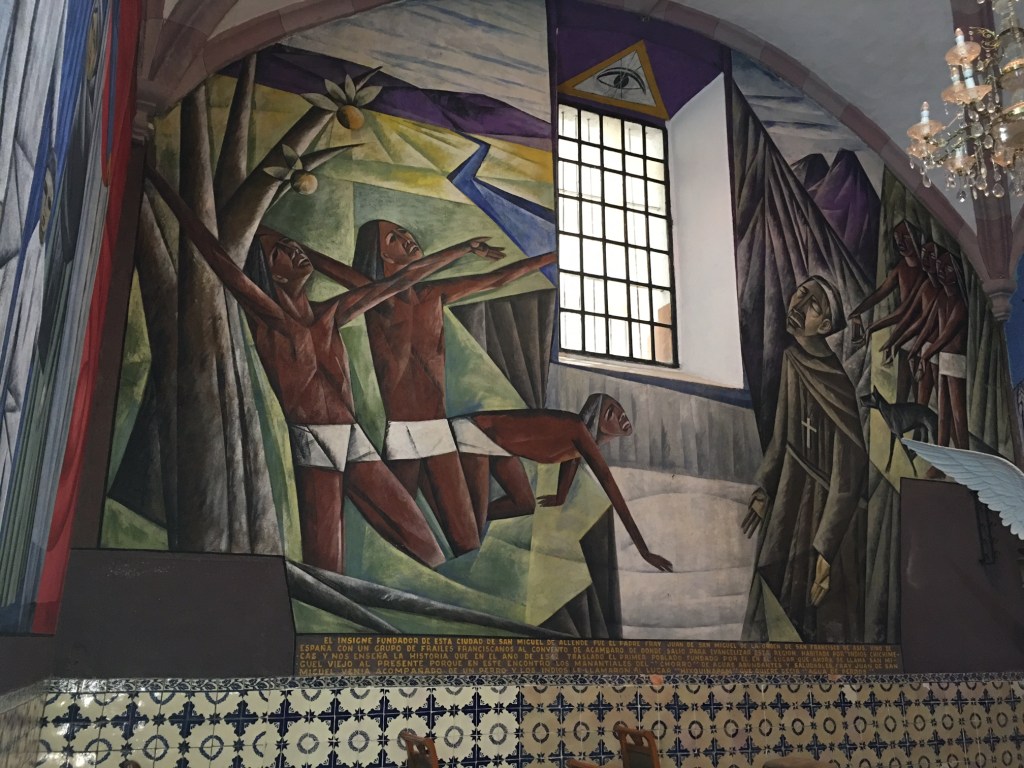
There is little in the city that recognizes the Indigenous presence. There is, however, a cringe-worthy mural located in a side altar of the city’s grand La Parroquia church depicting Indigenous people kneeling in supplication before a European friar.
Today, vendors, many of them Indigenous and selling balloons, hats, and other goods are largely banned from the pedestrian-only streets in the centre. They must set up just outside of the traffic barricades.
Expats with money
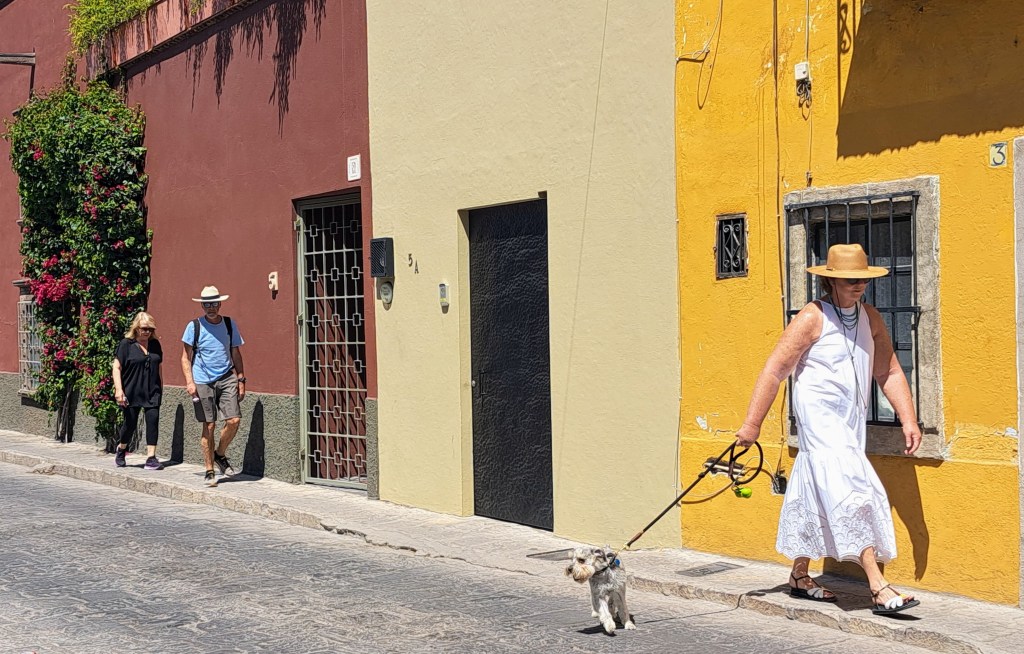
San Miguel is now home to about 175,000 people. Ten percent are expats, of which Canadians make up about 5,000 residents. These expats are mostly older people with money, and the city has a thriving cultural industry to serve them. Author Margaret Atwood, for instance, was in town for a literary event the night before we arrived.
Tourism is the main industry in San Miguel, as it is in many places around the world. It brings jobs — albeit precarious ones — and injects money into the community. But it can also wash over local cultures, reinforce inequality and create a distorted use of resources.
Expatriates today have created a raft of charities, which include programs for children, poor women, the elderly, animal shelters and cultural programs, even a project to subsidize the musical education of talented Mexican children. One might ask if the latter is the most important need in San Miguel, but the point is that philanthropists choose their own causes.
As Lisa Pinley Covert, an associate professor of history at the College of Charleston in South Carolina who has researched tourism in Mexico extensively, writes: “High income gentrification is reliant upon a supply of low wage labour.” Most expats who own or rent homes employ cleaners, gardeners, cooks and other service employees. Many expats are generous and just, but salaries and working conditions rely upon the whim of employers.
Think as we go
I have been to San Miguel twice and hope to return, but I also want to avoid indulging in a sanitized version of an imagined past and a heavenly present. We who are privileged enough to travel owe it to the good people we are visiting to know more about their lives and struggles.
Discover more from Pulpit and Politics
Subscribe to get the latest posts sent to your email.


San Miguel de Allende is special to me as well since I’ve been there several times over the years. You are fortunate to have enjoyed a recent visit.
LikeLike
Thanks for your note Fran. I know that you worked extensively in Latin America in pursuit of justice for the people there.
LikeLike
Thanks for your response. It looks like the snow will be coming down in great amounts this week. Great news for the skiers.
LikeLike
Nice to see you had a great trip. Maybe read my blog or better sign up for the newsletter for free: judyhaiven.substack.com
Judy Haiven, PhD * * Writer/ Activist retired Professor, Saint Mary’s University * Halifax, NS Mi’kma’ki *Canada email: jhaiven@gmail.com
Tel: mobile 902 718 7445
I acknowledge that, here in Nova Scotia, we are in Mi’kma’ki, the ancestral and unceded territory of the Mi’kmaq People.
“The trouble is that once you see it, you can’t unsee it. And once you’ve seen it, keeping quiet, saying nothing, becomes as political an act as speaking out. There’s no innocence. Either way, you’re accountable.” Arundhati Roy . https://www.azquotes.com/quote/487213
LikeLike