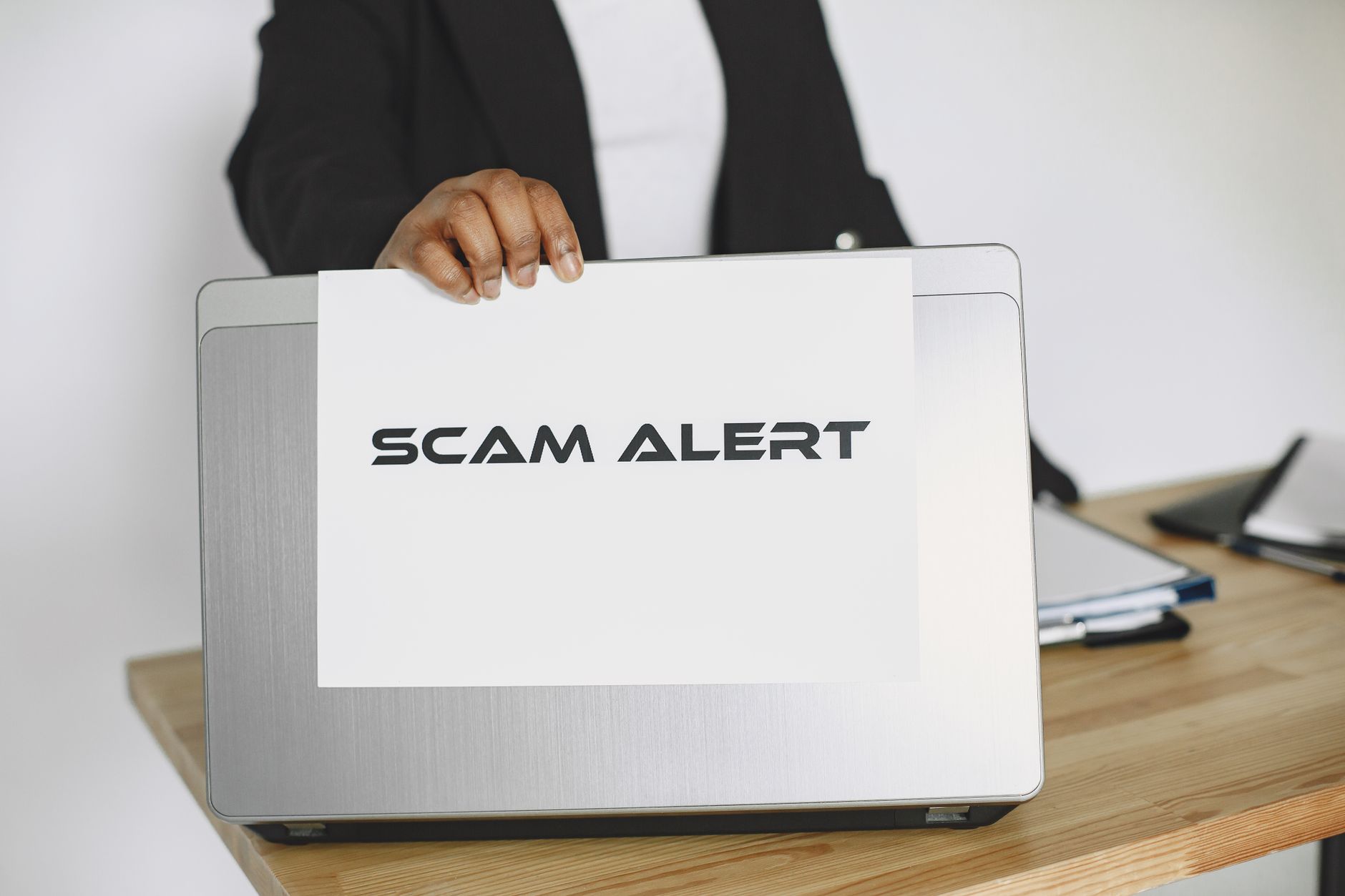
I am a published author, and like many other writers my inbox is brimming with scam offers to introduce me to thousands of readers in metropolitan book clubs, to find reviews and podcast interviews for me, to oversee my metadata, and to publish my next book.
I usually delete these messages promptly, but recently I decided to save and read them. I had eleven in September, twenty-two in October, and five in the first two days of November.
Fake names and Gmail addresses
The messages come from people with names like Corrine Hartwell, Harriet Ashford, Elaine Jeffrey, Maya Gagnon, and Alex Frith. They claim to represent publishers, publicists and book clubs like Trevino Books, Everleaf Books, Osborne Publishing, Algonquin books, The Reading Circle, and Catching Up on Classics. Several of my correspondents imply that they either represent or have some relationship with the Goodreads book review site.
Interestingly, these messages always have Gmail addresses. That is a red flag because real companies have websites with their own domains and email.
Mining the Writers’ Union
I have wondered, as well, how scammers know where to reach me. I do not list my email address on my website or any of my social media accounts. The mystery may have been solved in a message from one of my correspondents. She mentioned seeing my work described on The Writers’ Union of Canada [TWUC] website. I am a member, and my email address is posted there. TWUC has 3,000 members, which must provide a happy hunting ground for scammers. Many members, however, choose not to post their address, and I now plan to take mine down. Anyone wanting to reach me will be able to do so through the TWUC office.
Scammers gather details
Some messages that I receive contain generic pitches, but most provide significant details about my books. My most recent title is A Communist for the RCMP. It is the story of Frank Hadesbeck, a blue-collar worker who was a member of the Communist Party and a paid informant for the RCMP in Calgary and Regina for 35 years. He was a small timer, but he was unique in keeping a written record of his debriefings by RCMP handlers. He died in 2006 but I was gifted his papers by an academic who had planned to write a book about Hadesbeck but never did.
Some pitches contain a detailed description of my book, as well as mentioning others that I have written. There is also biographical material about where I went to school and the various jobs that I have had. There is also a notable similarity in most of the messages that I receive. In the Preface to my book, I write, “Defying every warning given to him by his RCMP handlers, Hadesbeck had kept notes.” That line is commonly used in the messages I receive.
Scammers use generative AI
How do they know so much about me and my books? That is where generative AI comes in. I am a slow adapter, but I have learned that generative is a specialized subset of AI focused on creating content such as text, images, music, or code.
The Writer’s Weekly website in the U.S. shows just how easy it is to generate detailed descriptions. “Go to chatgpt.com or another AI service,” says the website. “Type this into the search box: Write a complimentary email for (your name), about (his/her) book, (your book title).”
I did that for my book and in about five seconds I received a message which said, in part: “The book offers a compelling examination of political surveillance, civil liberties, and the human dimensions behind historical events. Balanced and engaging storytelling made the subject both accessible and absorbing.” I also plugged my name into chatgpt.com and within a few seconds
I was reading my own biography.
AI companies are busily scraping material from wherever they find it online. Some of that material is in the public domain, but much of it is not. The companies simply steal it. There are several lawsuits in progress to have them pay for what they take.
Ego marketing and aggressive pitches
AI’s warm praise for my book is what Writer’s Weekly calls “ego marketing.” They issue this warning: “No matter how flattering the email, know that the person (it’s most likely a bot) contacting you has not read your book. They are rubbing your ego (a very effective marketing technique) to try to get your money. Don’t fall for it!”
Ego marketing is one common approach, but there are others. In a pitch to me someone named Michael Jeremiah came on aggressively: “Look at the books sitting next to yours in the same categories,” he wrote. “Many of them, from authors with shorter careers and fewer titles, have hundreds or thousands of ratings online. Yours have a small footprint, even with nine books . . . That is a gap in reach. That is what I help authors close.”
Ouch. It is easy for writers to develop an inferiority complex and therein lies a vulnerability. We have sweated over our books. We want them to find a wide audience, and we are keenly disappointed with ourselves and our publishers when that does not happen.
Impersonating journalists
Other approaches are even more brash than Michael Jeremiah’s to me. I received a message from someone claiming to be a female journalist who worked for a National Public Radio station in Lubeck, Texas. She was impressed by my book about the RCMP and offered to do an interview. She even posed several potential questions.
I was suspicious. Rather than respond directly, I used Linked In to find that person’s profile, and I sent her a note. She replied promptly. “I’m glad you reached out to double-check,” she wrote. “That is definitely not me and I’m no longer associated with the station. You’re not the first person who has contacted me about this either. These scammers are getting wildly creative with their schemes.”
Impersonating publishers
A respected Toronto publisher has suffered an even more brazen scam. I received an email, purportedly from her, saying that she wanted to know more about my writing and my forthcoming projects. I went to her website, only to see a fraud alert message. “I’ve recently been the victim of online impersonation,” she wrote. “If you receive an email from me, it will be from the official domain (not aol.com or gmail.com or equivalent).” The scammer even provided a photo in the message sent to me, lifted from the publisher’s Linked In account.
Scammers in sweatshops
Who are these people? Despite the names provided — Hartwell, Ashford, Jeffrey, Gagnon, Frith – most of the scammers are in Nigeria, India, and the Philippines. It is their victims who are in the U.S., Canada, and other more affluent countries. In some cases, scammers excuse their predation on the grounds that these victims are rich people.
That would surprise many poorly compensated writers, but then other victims may well be hobbyists or people who start writing in retirement. They likely have money, or at least more of it than the people attempting to defraud them. And behind the scammers, as unfortunate as they are, is an organized criminal activity.
Be careful and deliberate
Organizations representing writers warn against accepting an unsolicited pitch, the digital equivalent of a cold call. Writer’s Weekly warns, “Online scams against authors are on the rise and becoming increasingly sophisticated, fueled by the widespread use of generative AI, which excels at mimicry. Nearly every day, we hear from authors who have been scammed or would have been had they not first reached out to the Authors Guild to confirm whether an ‘offer’ was real.”
The basic message is to be cautious and deliberate, and to reach out for advice before reaching for your credit card.
Discover more from Pulpit and Politics
Subscribe to get the latest posts sent to your email.


Leave a Reply