As the news cycle brims with stories about the potential of Artificial Intelligence (AI) to improve our lives, I have remained wary and resistant. Much of it, I know, is due to my own lack of knowledge, not to mention my innate mistrust of the big tech titans who seem content to undermine democracy and throw most of us out of work.
Pope Leo and Magnificent Humanity
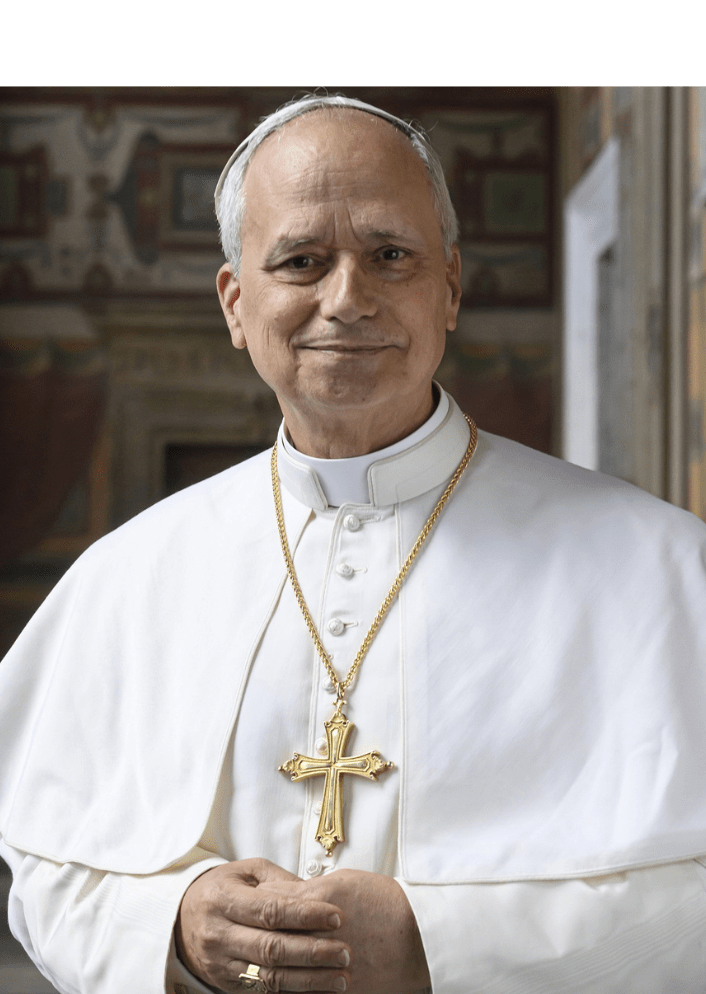
So, it is a great comfort to have Pope Leo XIV provide an eighty-three-page document which places the human person and the common good at the centre of the discussion about an increasingly pervasive technology.
The pope’s declaration is a lengthy statement (Catholics call it an encyclical) titled Magnificent Humanity. The pope released it on May 25 at the Vatican in Rome, and it is all about safeguarding human dignity in an era of massive technological change.
Defining AI
The encyclopedia Britannica defines artificial intelligence (AI) as the ability of a digital computer or computer-controlled robot to perform tasks commonly associated with intelligent beings. That can involve applications as diverse as medical diagnosis, computer search engines, voice or handwriting recognition, and chatbots – those software applications or web interfaces designed to converse through text or speech. Your bank, car dealership, Bell or Rogers, even the Canada Revenue Agency use them all the time in their “conversations” with you.
Elon Musk and the end of work
These are among the simpler manifestations of generative artificial intelligence systems. At a more complex level, Tesla CEO Elon Musk predicts that within the next ten to twenty years, work will be optional, the result of millions of robots in the workforce able to usher in a wave of enhanced productivity. Think of factory assembly lines or driverless vehicles.
Musk predicts that work will become optional when technology replaces human labour, but I have never heard him advocate for a guaranteed annual income.
AI is not human intelligence
It is here that Pope Leo weighs in. He recognizes the power of AI and the efficiencies that it can provide, but he adds, “we must avoid the misconception of equating this type of ‘intelligence’ with that of human beings . . .” (See section 99 of the encyclical)
“So-called artificial intelligences,” he writes,” do not undergo experiences, do not possess a body, do not feel joy or pain, do not mature through relationships and do not know from within what love, work, friendship or responsibility mean. Nor do they have a moral conscience, since they do not judge good and evil, grasp the ultimate meaning of situations, or bear responsibility for consequences.”
Quotes from Magnificent Humanity
Pope Leo on AI and the economy
Leo noted that the world’s wealth “is increasingly concentrated in fewer hands, widening inequalities.” In the age of AI and robotics, it is no longer possible to rely solely on the “invisible hand’ of the market,” Leo wrote, urging politicians to orient policies toward “the common good” and to promote “dignified work, social inclusion and an equitable distribution of the benefits of innovation.”
Pope Leo on AI and labour
Leo said the workplace must be governed by “the protection of employment opportunities and the irreplaceable role of the individual.” He warned that “the pursuit of greater profits cannot justify choices that systematically sacrifice jobs, because the human person is an end, not a means, and the economic order must remain subordinate to human dignity and the common good.” Leo also said governments must foster conditions that favor employment “since it is a primary good for families and for societies.”
Pope Leo on AI and democracy
“Indifference to the truth leads, slowly but surely, to a descent to totalitarianism.”
Pope Leo on AI and social media
Leo said that those who control digital platforms, including social media, have a power that “should be constantly guided by the pursuit of truth or respect for human dignity.” The internet should be seen as “a setting in which inner freedom and critical thought can mature,’’ and not “an instrument of excessive distraction, homogenization or dominance.” The backdrop is that communication not only transmits information but creates culture.
Pope Leo on AI youth impact
Leo called for an alliance among policymakers, educational institutions and families to help navigate the “culture of immediacy and hyperstimulation” created by digital media. He also highlighted how AI amplifies the danger of predation on young people, and warned against having personal mobile devices at too young an age. “Online phenomena such as grooming, blackmail and the sexual exploitation of minors are not uncommon, and are made more insidious by the use of fake profiles, algorithms that facilitate dangerous contact, and AI tools capable of manipulating images and videos,” the pope wrote.
Pope Leo on AI and the Environment
Leo addressed the environmental costs of the data centers that are generating AI models, consuming “enormous amounts of energy and water, significantly influencing carbon dioxide emissions.” As demands increase, especially for large language models, Leo called for the development of more sustainable technological solutions.
Pope Leo on AI and War
Leo said that AI “can only bring conflict about more quickly and render it more impersonal.” He called for concrete criteria when making a decision to strike. That includes an identifiable chain of responsibility applying also to “those who design, train, authorize and employ technology,” and measures, so that target selection takes into account the difference between combatants and noncombatants, and the impact on defenseless populations. Non-negotiable requirements include guarantees of accountability and that deployment of lethal force cannot be automated. Leo also called for a shared international framework “to curb the technological arms race and ensure robust protection for civilians.”
Pope Leo on AI and human trafficking
Leo underlined the role of digital networks — including online platforms, messaging systems, anonymous payment methods — in human trafficking, which he said “must be recognized as a contemporary form of slavery.” He warned that failing to respond to or tolerating these practices risks complicity in “today’s sins, which are akin to those of the past when slavery was being concealed and justified.”
Rerum Novarum
This statement by Pope Leo is not a rare new departure. He expressed his concerns about AI on the second day of his papacy just over a year ago, and he has spoken about it repeatedly since then. His concerns about the human dimension in the face of technological change also resonate with a papal statement called Rerum Novarum, ( Of New Things) released in 1891 by Pope Leo XIII.
That document was written during the upheaval of the Industrial Revolution, and it attempted to safeguard the rights and dignity of the working class. Pope Leo XIII even spoke out in favour of labour unions, something that most people probably do not know.
Catholic social teaching
In what was a foundational document for Catholic social teaching Pope Leo XIII called on governments to “save unfortunate working people from the cruelty of men of greed, who use human beings as mere instruments for money making,” even as it praised the “discoveries of science.”
It is not an accident that the current pope chose the name Leo, and there is a deep symbolism in his signing his encyclical on the 135th anniversary of the publication of Rerum Novarum.
Government’s responsibility to protect
Then, as now, new technologies promised new and untold wealth, but techno optimism and the pursuit of profit either ignored or suppressed the human dimension. It was, and is, left to moral leaders to insist that this human dimension be prominent. But it will be our governments and our social movements which ultimately will have a responsibility to protect.
Discover more from Pulpit and Politics
Subscribe to get the latest posts sent to your email.


Thanks for this latest post, Dennis! I was wondering why, back in February, Leo advised priests to refrain from using AI to write their sermons? Or why, for $1.99 a minute, anyone can turn to an AI Jesus – as an answer to our Christian Nationalist prayers that He return? Or why the AI Fr. Justin wasn’t a big hit? Catholic Answers Pulls Plug on ‘Father Justin’ AI Priest – EWTN Great Britainhttps://ewtn.co.uk/article-catholic-answers-pulls-plug-on-father-justin-ai-priest/
LikeLike
Thank-you, Dennis, for this posting. The very term “artificial intelligence” is an oxymoron, but I guess we are stuck with it. Pope Leo is to be highly commended for having tackled the issue. To say that this encyclical is of utmost significance hardly begins to do justice to the the document itself. For you interest, here’s another take on the topic: https://www.youtube.com/watch?v=w8e35VtDMF8.
Lawrence S. Cumming
LikeLike
Thank you Lawrence. It is always good to receive your comments.
LikeLike